Introduction
Model-Based Testing (MBT) is a screening approach in application development that makes use of models to represent the desired behaviour of a software program system. These models can serve while a blueprint to automatically generate test cases, making the process more efficient, systematic, and scalable. MBT KISUMU SANDALS SHOES ONLINE is particularly helpful for complex systems in which manual test case generation is time-consuming and prone to be able to errors. This post explores the basic principles of MBT, its advantages, and a thorough guide on how to implement this effectively in computer software development.
Understanding Model-Based Testing
What is Model-Based Testing?
additional hints -Based Testing is a tests technique where models describe the conduct from the software underneath test (SUT). These types of models can turn out to be graphical representations want state diagrams, flowcharts, or decision dining tables, as well since formal mathematical types. The goal will be to represent the software’s functionality in a simplified yet precise manner, permitting automated test case generation and delivery.
Key Concepts in MBT:
Models: That they represent the predicted behavior of the software. For example, a state device model might illustrate how a technique transitions between different states based on events.
Test Era: Using models, different tools can instantly generate test circumstances. These test cases ensure that typically the software’s behavior aligns with the unit.
Test Execution: Typically the generated tests are usually executed against typically the software to see if typically the actual behavior matches the expected behavior identified in the model.
Model Validation: This process ensures that the particular models accurately represent the desired habits before using these people for test era.
Benefits of Model-Based Screening
Increased Test Protection: By basing testing on models, this is possible to be able to cover various routes and scenarios, top to more thorough testing. It will help within identifying edge instances that might get overlooked in handbook testing.
Automation: MBT permits the auto generation of test out cases, reducing the particular manual effort required to design plus write tests. This particular can speed up therapy process plus reduce the possibilities of human error.
Early Defect Detection: Since models are developed early in the software program development lifecycle, they will help in discovering defects in typically the design phase itself. Early defect recognition results in lower costs and quicker quality times.
Adaptability to be able to Changes: Changes within software functionality can easily be reflected in the model, enabling the generation of new test cases that will adapt to these kinds of changes. This helps make MBT ideal for tasks with evolving requirements.
Reduced Redundancy: MBT helps in eliminating redundant test instances by focusing upon testing different situations as described simply by the models. This kind of leads to a new more efficient tests process.
Implementing Model-Based Testing: A Step-by-Step Guide
The productive implementation of Model-Based Testing within a software program development process entails several steps, each of which leads to building an efficient and systematic tests strategy. Here’s precisely how to implement MBT KISUMU SANDALS SHOES ONLINE step by action:
1. Understand the particular Software Specifications
Just before starting with MBT KISUMU SANDALS SHOES ONLINE, it is important to have the thorough understanding regarding the software needs and its expected behavior. This can form the foundation for creating correct models. Engage with stakeholders, including developers, product managers, and even end-users, to collect and validate requirements.
a couple of. Select the Appropriate Modeling Language
There are various which languages that can be used intended for MBT, including One Modeling Language (UML), State Transition Layouts, and Decision Dining tables. The choice associated with language depends upon what complexness of the program and the degree of abstraction needed:
State Transition Blueprints: Best suited with regard to applications with different states and transitions, such as user interfaces or workflow techniques.
UML Diagrams: Valuable for modeling both static and dynamic aspects of something.
Decision Tables: Well suited for representing business reasoning and rules.
Selecting the right language ensures that will models are easy to understand and accurately capture the required behavior of typically the software.
3. Create the Model
Make a model that represents the anticipated behavior in the computer software. The model need to be as easy as you possibly can but detailed enough to record all relevant cases. Some key points in order to consider while designing a model include:
Understanding States and Changes: For state-based systems, define different states and the activities that cause transitions together.
Input and Output: Clearly identify the inputs for the system and typically the expected outputs.
Constraints and Conditions: Contain any constraints, these kinds of as boundary situations or preconditions, that affect the software’s behavior.
Tools such as IBM Rational Rhapsody, Microsoft Model-Based Tests (MBT) tools, in addition to Spec Explorer can be helpful in creating designs for MBT.
4. Validate the Type
Before using the model for check generation, validate that to make sure that it accurately represents the software’s desired behavior. This can be done through:
Manual Assessment: Conduct a review of the type with stakeholders in order to ensure its precision.
Simulation: Use type simulation tools to verify if typically the model behaves while expected when exposed to different inputs plus conditions.
Validating the model ensures that the generated analyze cases will become effective in verifying the software’s behavior.
5. Generate Test Cases
Once the design is validated, make use of MBT tools in order to automatically generate check cases. These tools uncover tests using the routes and scenarios identified in the design. The test cases may be generated to cover different amounts of coverage, such as:
Path Coverage: Assures all possible routes through the type are tested.
State Coverage: Verifies of which all states in the model are reached.
Transition Protection: Checks that just about all transitions between states are tested.
Programmed test generation reduces the trouble needed to create comprehensive test suites.
6. Incorporate with Test Motorisation Frameworks
Integrating MBT-generated test cases using test automation frames like Selenium, JUnit, or TestNG enables for seamless execution. The integration can be achieved by:
Mapping Model Plugs to Test Scripts: Translate the inputs defined in the model into particular test scripts appropriate with your software framework.
Defining Analyze Data: Ensure that the generated checks get access to the required test data with regard to execution.
Setting Up Test out Environments: Configure surroundings for executing checks, including establishing databases, APIs, or additional dependencies.
Integration with test automation frames allows for constant testing and faster feedback loops.
7. Execute Tests and even Analyze Results
Perform the generated test out cases and assess the results in order to ensure the application behaves as predicted. This includes:
Analyzing Pass/Fail Rates: Review typically the results to recognize places where the software’s behavior deviates from your expected behavior.
Debugging Failures: For been unsuccessful tests, investigate the basis cause by contrasting the actual behaviour with all the expected conduct described in typically the model.
Updating typically the Model: If issues are identified, upgrade the model in order to include new scenarios or adjust current ones.
This iterative process ensures that the software is thoroughly examined and meets typically the desired quality specifications.
8. Maintain plus Update the Models
As software changes, so do it is requirements and functions. Continuously maintain and even update the types to reflect any kind of changes in the particular software. This guarantees that the produced test cases remain relevant and powerful.
Version Control: Work with version control equipment like Git to track changes inside models and keep a history involving updates.
Regular Reviews: Periodically review types with the advancement and testing teams to make certain they are usually up-to-date using the software’s functionality.
Maintaining up to date models is critical regarding long-term success inside MBT.
Challenges in Model-Based Assessment
Putting into action MBT could be demanding, particularly in the following areas: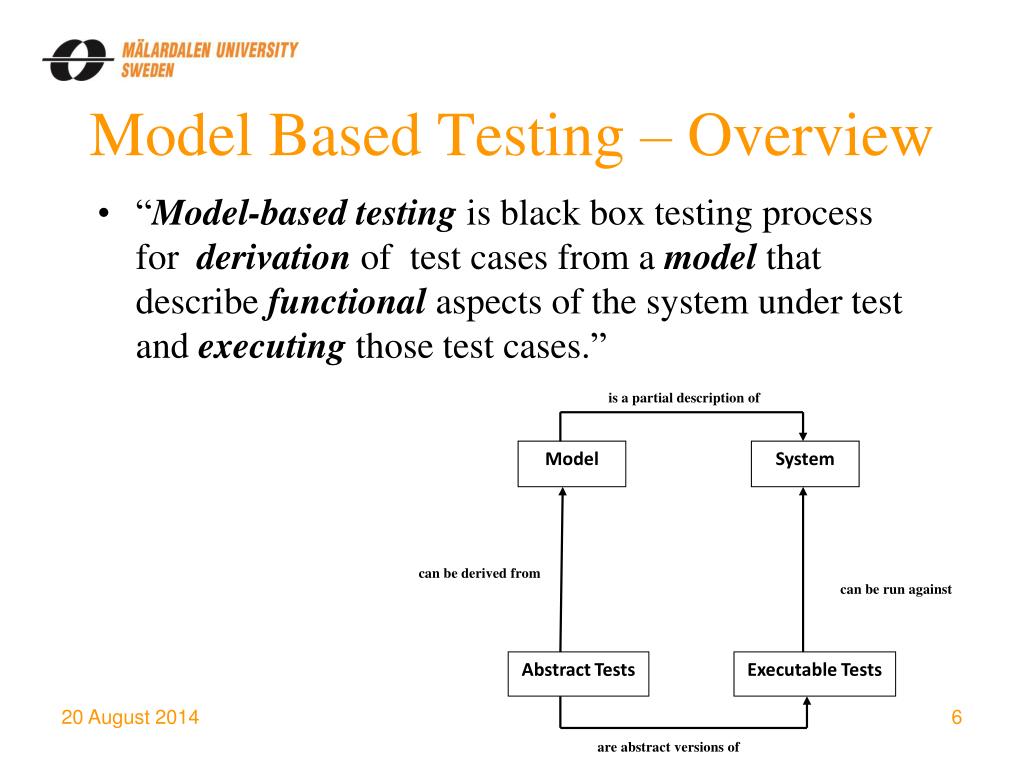
Model Complexity: Creating models for highly complex methods can be labor intensive and require knowledge.
Tool Selection: Finding the right tools that help the chosen building language and incorporate well with present development workflows can be difficult.
Skill Set: MBT KISUMU SANDALS SHOES ONLINE requires testers to be able to have familiarity with each testing and modeling, which may necessitate additional training.
In spite of these challenges, some great benefits of improved test protection, early defect detection, and automation help make MBT an important approach for contemporary software developmen
How you can Implement Model-Based Screening in Software Development
by
Tags:
Leave a Reply