In the ever-evolving regarding software development, computer code documentation has always been a crucial nevertheless often neglected process. Developers spend some sort of significant portion of their time writing and maintaining documentation, particularly docstrings—those important in-code comments that will explain what a new specific function, school, or module does indeed. Despite their importance, many programmers discover docstring creation tedious and time-consuming, top to incomplete or perhaps unclear documentation. Get into Artificial Intelligence (AI) and Machine Studying (ML), technologies of which are revolutionizing signal documentation by automating the generation of docstrings.
This post will explore the role of AI-powered docstring generation inside transforming code documentation, its advantages, present tools, challenges, in addition to the future involving machine learning inside software development.
imp source of Docstrings in Software Enhancement
Before diving in the intricacies of AI-powered docstring generation, it’s essential to recognize the critical function that docstrings have fun with in software development. Docstrings serve a number of purposes:
Clarity: They will help developers plus future collaborators understand the purpose in addition to functionality of computer code, especially in sophisticated systems.
Maintenance: Extensively researched code is easier to update in addition to debug. Clear docstrings serve as research points when changes need to become made.
Collaboration: Found in team environments, excellent documentation makes sure that developers can quickly realize and contribute in order to existing codebases.
Standardization: Many programming dialects like Python, Java, and C# stick to documentation conventions, this sort of as PEP 257 in Python, which in turn specify how docstrings should be organized.
Despite these rewards, writing good docstrings often takes a new backseat to real coding. This is usually where AI in addition to machine learning get play, offering remedies that can systemize and improve the process.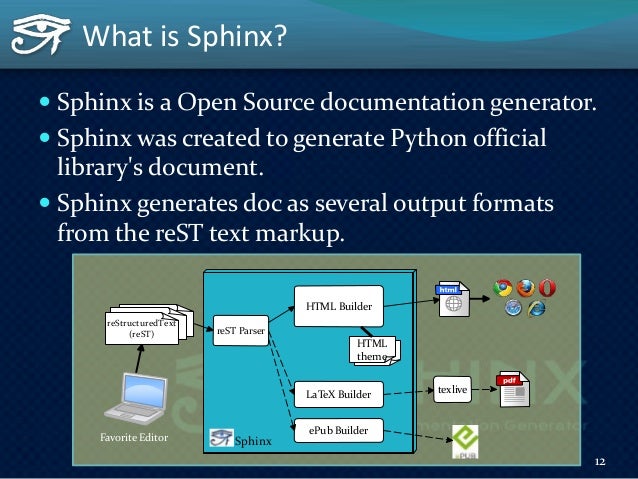
What exactly is AI-Powered Docstring Generation?
AI-powered docstring generation pertains to the make use of of machine mastering models, particularly herbal language processing (NLP) algorithms, to instantly generate docstrings for code. By inspecting the structure and even logic of an item of code, AI models can produce human-readable explanations that will describe its efficiency, inputs, outputs, plus other key elements.
From its core, AI docstring generation is powered by great language models (LLMs) like OpenAI’s GPT (Generative Pre-trained Transformer) or Google’s BERT (Bidirectional Encoder Representations from Transformers). These types of models are trained on vast datasets containing both code and documentation, allowing them to study patterns and generate coherent, context-appropriate docstrings.
How AI Models Work for Docstring Technology
Training on Computer code Datasets: AI top models are trained on large repositories regarding code, such while GitHub, Stack Overflow, or open-source jobs. This training contains both the code itself and its accompanying documentation.
Program code Parsing and Understanding: When given some sort of new item of code, the AI type uses NLP methods to parse in addition to understand the code’s syntax, logic, and even intent. It evaluates variables, function meanings, return values, in addition to other elements in order to grasp what the particular code is carrying out.
Docstring Generation: Based on its being familiar with, the AI design generates a docstring that summarizes typically the code’s functionality. It might produce descriptions regarding functions, methods, details, return values, exceptions, and even include notes or cases if required.
Modification: Some AI tools allow developers to be able to customize the outcome format or structure of the produced docstrings, ensuring that will the documentation sticks to to specific job guidelines or coding standards.
Key Positive aspects of AI-Powered Docstring Generation
1. Moment Efficiency
Probably the most considerable advantages of AI-powered docstring generation will be the time saved with regard to developers. Writing detailed docstrings can end up being a painstaking procedure, especially for big codebases. Automating this allows developers to pay attention to more critical duties like coding and even debugging.
2. Regularity and Standardization
AI-powered tools can ensure that docstrings follow a consistent formatting and stick to particular documentation standards (such as PEP 257 for Python). This leads to clean, more organized paperwork through the entire codebase, improving readability plus maintainability.
3. Decrease in Human Problem
Manual documentation usually suffers from human errors, such because incorrect descriptions, absent parameters, or obsolete information. AI methods, delete word, analyze typically the actual code to be able to generate docstrings, lowering the likelihood involving errors or absences.
4. Handling Legacy of music Code
Many companies have vast amounts of legacy code using little or no documentation. AI-powered tools may help fill inside the gaps by generating docstrings regarding older code, making it easier to take care of and upgrade and not having to reverse-engineer functionality.
five. Supporting New Builders
AI-generated docstrings can serve as educational tools regarding junior developers or perhaps contributors who are usually not really acquainted with a codebase. Clear, automatically developed documentation can aid them understand attributes and modules more quickly, reducing onboarding time.
Current AJAI Tools for Docstring Generation
Several AI-powered tools have emerged in recent many years to facilitate computerized code documentation. Some of the most notable include:
1. GitHub Copilot
GitHub Copilot, produced by GitHub and OpenAI, is definitely one of typically the most well-known AI-driven code assistants. Besides writing code clips, Copilot can instantly generate docstrings since developers code. By analyzing the construction and context of the code, it provides recommendations for docstrings that describe the functionality, its parameters, and even return values.
two. Kite
Kite is usually another popular AI-powered coding assistant that will supports various development languages. It may auto-complete code and produce docstrings based on the code’s context. Kite’s AI-driven docstring generation assists ensure that code is accompanied by simply clear, concise records.
3. Codex
Formulaire, another AI model by OpenAI, will be particularly adept at understanding and generating signal in multiple foreign languages. It can write docstrings, translate code from one terminology to a new, and still create complex program code from natural dialect prompts. Codex acts as the central source for tools such as GitHub Copilot.
5. Pylint-AI
Pylint-AI is definitely an extension of the particular popular Python linter, Pylint. It integrates AI-powered docstring technology in the linting process. This tool ensures of which docstrings are developed but also conform to Python’s PEP 257 documentation guidelines.
Problems and Limitations
While AI-powered docstring technology offers numerous rewards, it is not necessarily without its issues and limitations.
1. Context Knowing
Though AI models can parse code syntax, they may have a problem with understanding complex framework or intent at the rear of the code. For example, AI might certainly not fully understand domain-specific reasoning, leading to vague or incomplete docstrings.
a couple of. Quality Control
The quality of AI-generated docstrings can change depending on the complexity of the code along with the dataset used to train the model. In some cases, developers may will need to review in addition to revise the generated docstrings to make sure accuracy and clarity.
several. Language Obstacles
AJE models trained on the subject of English-based datasets might have limitations whenever generating docstrings consist of languages or handling non-English code remarks. This can be an issue with regard to developers working in multilingual codebases.
four. Security and Personal privacy Issues
AI models like GitHub Copilot have faced criticism for potentially subjecting proprietary or delicate code snippets during the training method. Organizations need to be mindful when using AJE tools, especially found in secure environments.
Typically the Future of AJAI in Code Records
The future involving AI-powered docstring generation looks promising simply because machine learning choices continue to improve in both accuracy and reliability and context knowing. Here are a few developments all of us can expect:
one. Improved Contextual Awareness
As AI styles evolve, they may likely become far better at understanding the wider context of signal, leading to more accurate and descriptive docstrings. This includes coping with domain-specific logic and capturing the true intent behind signal.
2. Integration with CI/CD Sewerlines
AI-driven documentation tools can become a regular part of ongoing integration and continuous delivery (CI/CD) sewerlines, automatically generating in addition to updating documentation together with each code dedicate or change.
three or more. Multilingual Support
Potential future AI tools may possibly offer better support for generating docstrings in multiple dialects, catering to international development teams and multilingual codebases.
four. Customized Documentation Variations
AI tools may well evolve to create personalized docstrings that will align with specific company or project documentation styles, permitting greater customization plus flexibility.
Conclusion
AI-powered docstring generation is actually a game-changer for computer software development. It not necessarily only saves period but in addition ensures persistence, reduces human mistake, helping with heritage code maintenance. Since AI models turn out to be more sophisticated, typically the quality and context-awareness of generated docstrings will improve, generating them indispensable tools in the advancement process. While difficulties such as situation understanding and privacy concerns remain, the benefits of AI-driven code documentation far outweigh the drawbacks, heralding a foreseeable future where developers could focus more in innovation and fewer on documentation.
AI-Powered Docstring Generation: Just how Machine Learning Will be Changing Code Documentation
by
Tags:
Leave a Reply