In the modern software development panorama, the integration of Continuous Integration (CI) and Continuous Application (CD) pipelines using container orchestration has become a critical factor for reaching efficient, scalable, in addition to reliable software shipping and delivery. This article explores the most effective practices and tools for effectively integrating CI/CD sewerlines with container orchestration to streamline development workflows and enhance application deployment.
Comprehending CI/CD and Container Orchestration
Continuous The use (CI) is some sort of development practice where code changes will be automatically tested and merged into a contributed repository frequently. This approach aims to identify integration issues early, reduce the usage problems, and make sure that the application is always in a new deployable state.
Continuous Deployment (CD) runs CI by robotizing the release of computer software changes to creation. useful site ensures that updates usually are delivered rapidly and even reliably, minimizing the particular time between code commit and application.
Container orchestration consists of managing the deployment, scaling, and procedure of containerized programs. Containers package a software and its dependencies into a single unit that will can run regularly across different conditions. Container orchestration resources like Kubernetes, Docker Swarm, and Apache Mesos help automate these tasks plus ensure that applications run smoothly and efficiently.
Best Methods for Integration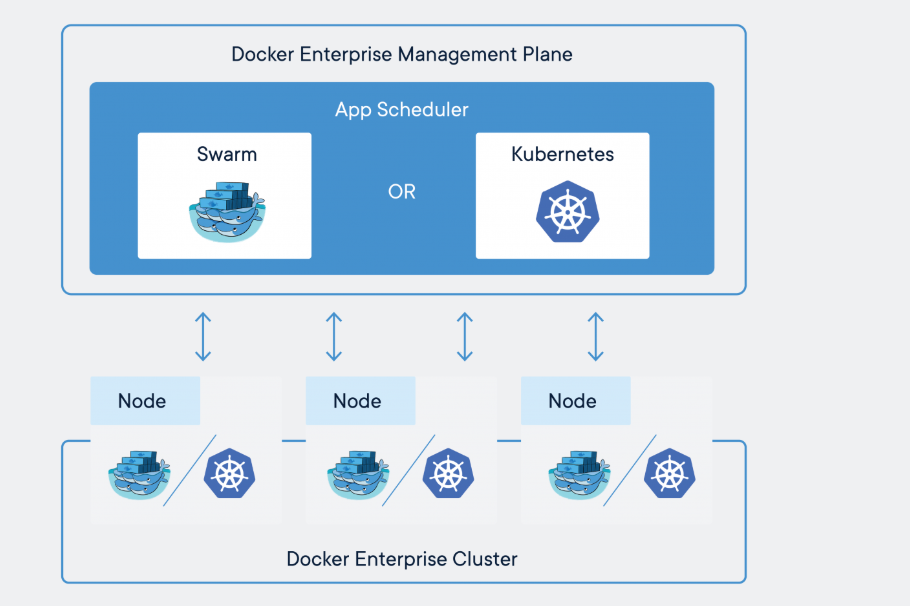
Adding CI/CD pipelines with container orchestration demands careful planning and even execution. Here are usually some best procedures to make sure a effective integration:
1. Establish Clear Objectives and even Goals
Before including CI/CD with textbox orchestration, define typically the objectives and aims of the the use. Determine what a person want to accomplish, such as minimizing deployment time, bettering application scalability, or even enhancing deployment stability. Clear goals may slowly move the selection associated with tools and the style of your CI/CD pipeline.
2. Use Infrastructure as Code (IaC)
Infrastructure since Code (IaC) permits you to manage and supply infrastructure through computer code. Tools like Terraform, AWS CloudFormation, and even Ansible enable a person to define and manage your infrastructure consistently and repeatably. Incorporating IaC into your CI/CD pipeline ensures that your own container orchestration surroundings is versioned and even reproducible, reducing the risk of settings drift and deployment issues.
3. Automate Testing and Approval
Automated testing can be a cornerstone of CI/CD. Implement automated unit tests, integration tests, and even end-to-end tests to make certain code quality and functionality. When integrating with container orchestration, include tests intended for container images, for instance verifying that Docker images are constructed correctly and that containers start and run needlessly to say. This approach helps get issues early in the development process in addition to ensures that just validated code gets to production.
4. Leveraging Container Registries
Pot registries are databases for storing plus managing container images. Popular registries include Docker Hub, Yahoo and google Container Registry, plus Amazon Elastic Pot Registry (ECR). Incorporate your CI/CD pipe with a container computer registry to automate the particular process of pressing and pulling pot images. Ensure that will your registry is definitely secure, and use version tags to manage different versions of the container images successfully.
5. Implement Moving Deployments and Blue-Green Deployments
Rolling deployments and blue-green deployments are strategies that will minimize downtime and be sure application reliability in the course of updates. Rolling deployments gradually replace cases of the old variation together with the new a single, permitting a clean transition. Blue-green deployments involve maintaining a couple of environments—one for the present version and one intended for the new version—enabling quick rollbacks in case needed. Implement these kinds of strategies within your own container orchestration device to boost deployment dependability and reduce the danger of downtime.
six. Monitor and Log Everything
Monitoring and logging are essential for maintaining software into the performance. Combine monitoring tools such as Prometheus, Grafana, plus ELK Stack (Elasticsearch, Logstash, and Kibana) together with your container arrangement environment to gather and analyze metrics and logs. Fixed up alerts regarding critical issues and even use dashboards to visualise performance data. Powerful monitoring and visiting help you discover and resolve issues quickly, ensuring a new stable and leistungsfähig application.
7. Guarantee Security and Compliance
Security can be a leading priority in any CI/CD pipeline and container orchestration environment. Implement security greatest practices like deciphering container images with regard to vulnerabilities, enforcing gain access to controls, and using secrets management tools. Equipment like Aqua Security and Snyk could help identify plus address security concerns in your textbox images. Additionally, ensure that your CI/CD pipeline complies using industry standards and even regulations, such while GDPR or HIPAA, as applicable.
Well-known Tools for CI/CD and Container Arrangement
Several tools are usually available to aid incorporate CI/CD pipelines along with container orchestration successfully. Here are some popular choices:
one. Jenkins
Jenkins is usually a widely used open-source CI/CD tool that supports various plugins for integrating together with container orchestration systems. Jenkins pipelines can easily automate the entire create, test, and application process, and plug ins like the Kubernetes plugin allow Jenkins to work effortlessly with Kubernetes.
2. GitLab CI/CD
GitLab CI/CD is an integrated area of the GitLab platform, offering powerful CI/CD capabilities and seamless integration using container orchestration. GitLab CI/CD pipelines can easily be configured to create and deploy container images to departments and orchestrate deployments using Kubernetes.
three or more. CircleCI
CircleCI is actually a cloud-based CI/CD application that provides quickly and efficient canal automation. CircleCI gives native support for Docker and Kubernetes, enabling smooth the use with container arrangement platforms. Its work flow feature allows for complex pipeline designs and orchestration.
5. Kubernetes
Kubernetes is a leading textbox orchestration platform that will automates the application, scaling, and managing of containerized programs. Kubernetes integrates with assorted CI/CD tools and offers features like going updates, service finding, and self-healing to make sure application reliability.
your five. Docker Swarm
Docker Swarm is Docker’s native container orchestration tool that makes simple the deployment plus management of containerized applications. It offers built-in support for service discovery, weight balancing, and climbing, making it a suited choice for more compact environments or groups using Docker.
Realization
Integrating CI/CD pipelines with container arrangement is a highly effective approach to achieving efficient, scalable, in addition to reliable software shipping. By using best practices such as defining clear objectives, using Infrastructure as Computer code, automating testing, using container registries, employing deployment strategies, overseeing and logging, plus ensuring security, you can streamline your enhancement workflows and boost application deployment.
Selecting the most appropriate tools, such since Jenkins, GitLab CI/CD, CircleCI, Kubernetes, in addition to Docker Swarm, can further support your integration efforts and even help you obtain your software delivery goals. Embracing these kinds of practices and resources will allow you to adjust to the active software landscape plus deliver high-quality applications with confidence.
Adding CI/CD Pipelines along with Container Orchestration: Guidelines and Tools
by
Tags:
Leave a Reply