SQLAlchemy is some sort of powerful and versatile SQL toolkit and Object-Relational Mapping (ORM) library for Python. One of their very useful features is usually the ability to model relationships between databases tables, allowing programmers to define associations between different organizations in an extra intuitive way. This kind of article gives a thorough guide to working with relationships in SQLAlchemy, including detailed signal snippets for typical relationship types.
What is SQLAlchemy ORM?
SQLAlchemy’s ORM allows designers to interact using databases using Python classes, eliminating typically the need to write raw SQL queries for every data source interaction. Web Site provides a high-level hysteria for database interactions, making it simpler to model complicated data structures although maintaining flexibility in addition to control over SQL.
Types of Relationships inside SQLAlchemy
When building relationships between furniture, SQLAlchemy supports many types, including:
One-to-One
One-to-Many
Many-to-One
Many-to-Many
Each relationship sort has specific make use of cases, and SQLAlchemy offers a straightforward way to define these kinds of associations while using relationship() and ForeignKey constructs.
Setting Up SQLAlchemy
Before diving into relationship examples, let’s set up the simple SQLAlchemy environment. We’ll use SQLite as the repository for demonstration, nevertheless SQLAlchemy supports many other databases.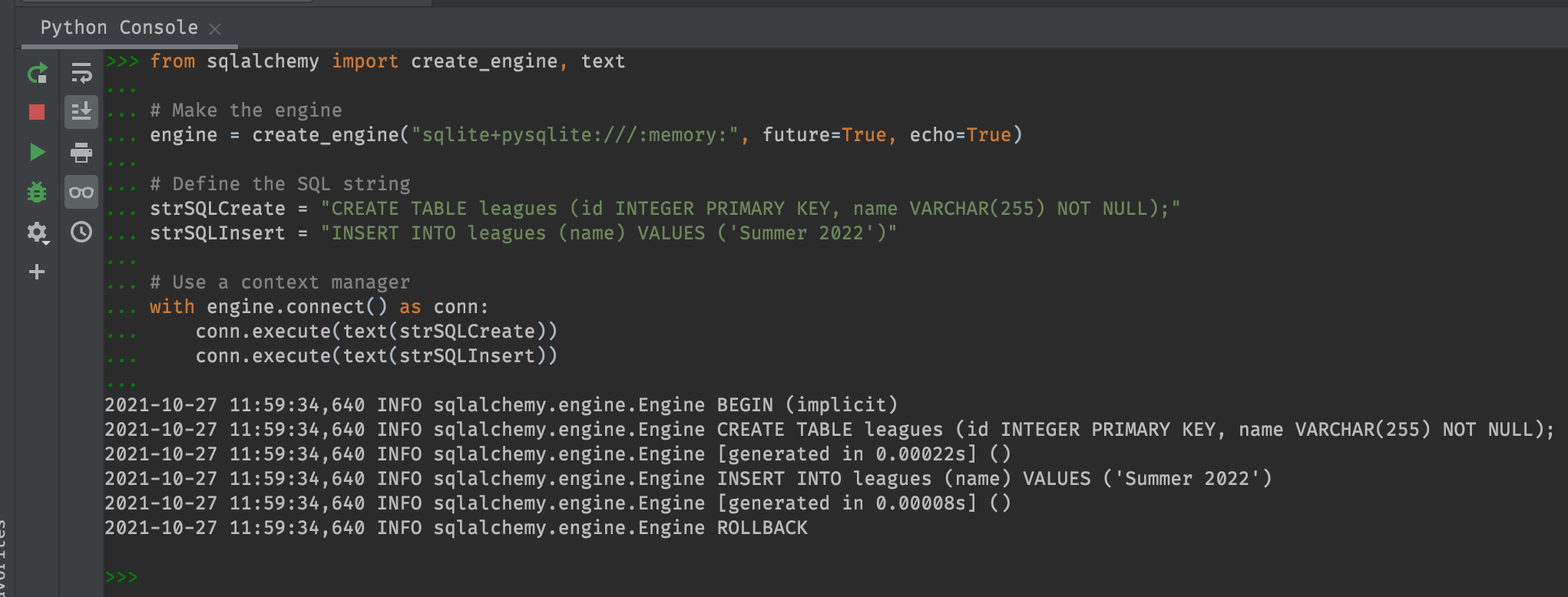
python
Replicate code
from sqlalchemy import create_engine, Column, Integer, String, ForeignKey, Table
from sqlalchemy. orm import connection, sessionmaker, declarative_base
# Create an powerplant and a base class
engine = create_engine(‘sqlite: ///relationships. db’, echo=True)
Base = declarative_base()
# Create the session
Session = sessionmaker(bind=engine)
session = Session()
One-to-Many Romantic relationship
A one-to-many romantic relationship occurs every time a document in one table can be associated with multiple information in another desk. For example, a good User can have got multiple Posts.
Defining One-to-Many Relationship
python
Copy program code
school User(Base):
__tablename__ = ‘users’
id = Column(Integer, primary_key=True)
label = Column(String)
articles = relationship(‘Post’, back_populates=’user’)
class Post(Base):
__tablename__ = ‘posts’
id = Column(Integer, primary_key=True)
title = Column(String)
user_id = Column(Integer, ForeignKey(‘users. id’))
consumer = relationship(‘User’, back_populates=’posts’)
In this example:
The User course provides a posts characteristic, that is a list regarding Post objects.
The Post class has an user credit that refers to be able to the User item it is owned by.
The ForeignKey inside the Post class helps to ensure that each post is associated with an Customer.
Inserting Data
python
Copy code
# Create tables
Foundation. metadata. create_all(engine)
# Create a new user and several posts
user1 = User(name=’John Doe’)
post1 = Post(title=’Post 1′, user=user1)
post2 = Post(title=’Post 2′, user=user1)
# Add and even commit to the particular session
session. add(user1)
session. commit()
Querying Data
python
Copy code
# Problem an user and the posts
user = session. query(User). filter_by(name=’John Doe’). first()
with regard to post in user. posts:
print(post. title)
Many-to-One Relationship
Some sort of many-to-one relationship is the inverse of one-to-many. In the prior example, each Write-up is related in order to one User. This specific relationship can be defined similarly using relationship() and ForeignKey.
One-to-One Romantic relationship
Some sort of one-to-one relationship indicates that a document in a single table refers to exactly one particular record within desk. For example, an User might have got just one Profile.
Understanding One-to-One Relationship
python
Copy code
course User(Base):
__tablename__ = ‘users’
id = Column(Integer, primary_key=True)
name = Column(String)
user profile = relationship(‘Profile’, uselist=False, back_populates=’user’)
class Profile(Base):
__tablename__ = ‘profiles’
id = Column(Integer, primary_key=True)
bio = Column(String)
user_id = Column(Integer, ForeignKey(‘users. id’))
user = relationship(‘User’, back_populates=’profile’)
In this kind of example:
The uselist=False parameter inside the Consumer class indicates that will each User might have only one Profile.
Inserting Data
python
Copy code
# Create tables
Bottom. metadata. create_all(engine)
# Create an user and a profile
user1 = User(name=’Jane Doe’)
profile1 = Profile(bio=’Software Developer’, user=user1)
# Add and devote to the program
session. add(user1)
session. commit()
Querying Information
python
Copy signal
# Query an user and the user profile
user = treatment. query(User). filter_by(name=’Jane Doe’). first()
print(user. account. bio)
Many-to-Many Relationship
A many-to-many partnership occurs when multiple records in one dining room table can be linked to multiple records within table. For illustration, Students can join in multiple Classes, and each Training course can have multiple Students.
Defining Many-to-Many Relationship
To define a many-to-many romantic relationship in SQLAlchemy, all of us need a connection stand:
python
Copy computer code
# Association table
student_course = Table(
‘student_course’, Base. metadata,
Column(‘student_id’, Integer, ForeignKey(‘students. id’)),
Column(‘course_id’, Integer, ForeignKey(‘courses. id’))
)
class Student(Base):
__tablename__ = ‘students’
id = Column(Integer, primary_key=True)
name = Column(String)
courses = relationship(‘Course’, secondary=student_course, back_populates=’students’)
category Course(Base):
__tablename__ = ‘courses’
id = Column(Integer, primary_key=True)
title = Column(String)
college students = relationship(‘Student’, secondary=student_course, back_populates=’courses’)
Within this illustration:
The student_course desk is an organization table that contains foreign keys to both students and courses.
The relationship() method uses the secondary parameter in order to link Student in addition to Course through the particular student_course table.
Putting Info
python
Replicate code
# Generate desks
Base. metadata. create_all(engine)
# Produce students and classes
student1 = Student(name=’Alice’)
student2 = Student(name=’Bob’)
course1 = Course(name=’Mathematics’)
course2 = Course(name=’Physics’)
# Associate learners with courses
student1. courses. append(course1)
student1. courses. append(course2)
student2. courses. append(course1)
# Add and devote to the session
session. add_all([student1, student2])
period. commit()
Querying Info
python
Copy code
# Query a new student and their very own courses
student = session. query(Student). filter_by(name=’Alice’). first()
for course in student. courses:
print(course. name)
# Query a course and its students
course = treatment. query(Course). filter_by(name=’Mathematics’). first()
for student inside of course. students:
print(student. name)
Eager and even Lazy Loading
SQLAlchemy allows developers to control how related things are loaded from your database:
Lazy reloading (default): Related items are loaded if accessed.
Eager launching: Related objects are generally loaded at typically the time of the original query using joinedload().
python
Copy code
from sqlalchemy. orm import joinedload
# Eager load content for an customer
user = program. query(User). options(joinedload(User. posts)). filter_by(name=’John Doe’). first()
Conclusion
SQLAlchemy tends to make it easy to define and handle relationships between database tables, allowing you to model structure data structures inside Python with minimum effort. Understanding these relationship types—one-to-one, one-to-many, and many-to-many—is crucial for building robust applications. The cases and code snippets provided with this guidebook should help you get began with defining interactions in SQLAlchemy and even querying related info efficiently.
By understanding these relationship techniques, you can acquire full advantage associated with SQLAlchemy’s ORM functions, creating applications that are both strong and maintainable. Joyful coding!
Working together with Relationships in SQLAlchemy: Code Snippets intended for Associations
by
Tags:
Leave a Reply