In the rapidly evolving landscape involving artificial intelligence (AI) and software advancement, the demand regarding efficient and trusted code generation provides never been greater. As AI-powered tools become integral to software engineering, the focus has shifted to optimizing workflows to boost productivity, reduce errors, and streamline the development process. One involving the key techniques that have come about in this framework may be the use associated with service virtualization. This article delves directly into how service virtualization can optimize AI code generation work flow, exploring its benefits, challenges, and best practices.
Understanding AI Program code Generation
AI code generation refers to the usage of device learning models and algorithms to instantly generate code structured on certain advices, such as end user requirements, design requirements, or even natural terminology descriptions. Tools just like OpenAI’s Codex, GitHub Copilot, and various other AI-driven development conditions have transformed the particular way developers create and manage program code. These tools leveraging vast datasets and deep learning versions to predict and generate code clips, functions, or actually entire programs.
Even so, integrating AI code generation right into a development workflow is simply not without its challenges. Developers often face concerns related to computer code accuracy, compatibility, and integration with other services and APIs. This is where service virtualization is.
What is definitely Service Virtualization?
Service virtualization is a method used to imitate the behavior regarding dependent systems, this sort of as APIs, databases, or microservices, which in turn are not readily available for development and tests. By creating virtual versions of these types of services, developers can simulate their behaviour, interactions, and reactions without relying in the actual systems. This allows intended for continuous development and testing, even when certain components are unavailable, under growth, or susceptible to frequent changes.
Within the context of AI code generation, service virtualization provides a managed environment where created code can always be tested, validated, and refined without typically the need for completely operational backend companies. This not just accelerates the development method but also makes sure that the generated signal is robust, reliable, and ready intended for deployment.
Benefits involving Service Virtualization in AI Code Technology
Enhanced Testing Functions: Service virtualization enables developers to produce genuine test environments that will mimic the behaviour involving external services and even APIs. This permits AI-generated code to be examined against a variety of scenarios, including edge situations and failure ways, ensuring that the code is certainly not only functional nevertheless also resilient.
Ongoing Integration and Distribution (CI/CD): Integrating support virtualization into CI/CD pipelines ensures that code is continuously tested in the simulated environment, getting potential issues earlier in the enhancement cycle. This potential clients to faster feedback loops, reduced time-to-market, and high quality signal.
Reduced Dependency about External Services: Throughout many AI-driven projects, the generated signal interacts with different third-party services. Services virtualization allows programmers to bypass the limitations of those services, such as availability, rate limits, or even geographical restrictions, by giving virtualized counterparts which can be used for development plus testing.
Cost Productivity: By using electronic services instead involving real ones, firms can significantly lessen costs associated together with service usage, specifically when coping with paid APIs or cloud-based services. Virtualization likewise minimizes the need for complex infrastructure setups, leading to lower detailed costs.
Scalability and adaptability: Service virtualization supplies a scalable solution intended for testing AI-generated computer code across different surroundings and configurations. Designers can easily duplicate various conditions, this sort of as network dormancy, service unavailability, or even version discrepancies, in order to ensure that the code performs suitably under all situations.
Challenges and Things to consider
While service virtualization offers numerous positive aspects, it is not without its challenges. Implementing service virtualization in AJE code generation workflows requires careful preparing and consideration of the following components:
Complexity of Virtualization: Creating accurate virtual services that tightly mimic real-world conduct can be intricate and time-consuming. The success of service virtualization is determined by how well these virtual services are created and maintained, which in turn requires a serious understanding of the root systems.
Integration together with AI Tools: Not necessarily all AI program code generation tools may well seamlessly integrate along with service virtualization frames. Developers need in order to ensure that their own chosen AI tools can interact with digital services since they would certainly with real types, without compromising the accuracy or productivity of code generation.
you can check here of Online Services: As actual services evolve, their very own virtual counterparts must be updated to echo changes in APIs, data structures, or perhaps performance characteristics. This ongoing maintenance can easily be resource-intensive, specifically in dynamic conditions where services frequently change.
Potential intended for Over-reliance: While support virtualization provides a robust testing atmosphere, it is vital to validate AI-generated code against genuine services before application. Over-reliance on electronic services can lead to differences between the controlled environment and the production environment, producing in unexpected concerns.
Best Practices for Implementing Service Virtualization
To maximize the particular benefits of support virtualization in AI code generation workflows, organizations should comply with the following finest practices:
Get started with High-Impact Services: Identify the particular services that are usually most critical to the AI code technology process and begin simply by virtualizing those. Target on services which can be frequently used, include high interaction costs, as well as prone to downtime.
Collaborate with AI Tool Providers: Work closely using the providers regarding AI code era tools to assure seamless integration along with service virtualization platforms. This collaboration may help address possible compatibility issues in addition to optimize the efficiency of the virtualized environment.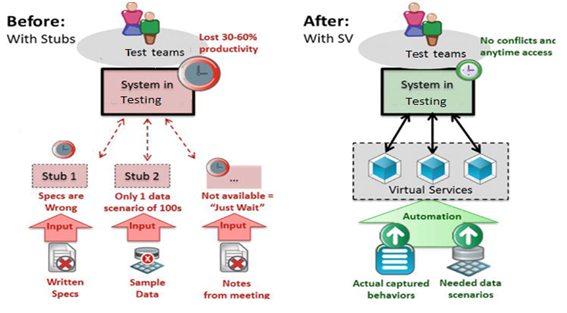
Implement Variation Control for Digital Services: Just since code is version-controlled, virtual services have to also be versioned to track adjustments and ensure uniformity across different development stages. This will help in managing improvements and maintaining position with the real services they emulate.
Regularly Validate In opposition to Real Services: Occasionally test AI-generated code against actual providers to verify the accuracy and dependability of the virtualized environment. This practice assists with identifying any kind of discrepancies early in addition to makes certain that the program code will perform while expected in production.
Automate the Virtualization Process: Leverage automation tools to streamline the creation, management, and deployment involving virtual services. Automation reduces manual work, minimizes errors, plus enhances the overall efficiency of the particular service virtualization process.
Bottom line
Service virtualization is actually a powerful instrument for optimizing AJE code generation work flow, offering enhanced tests capabilities, improved CI/CD processes, and lowered dependency on external services. By generating realistic and worldwide virtual environments, builders can ensure that AI-generated code is strong, reliable, and prepared for deployment. Nevertheless, successful implementation requires careful planning, continuing maintenance, and cooperation with AI tool providers. Using best practices, organizations could harness the total potential of services virtualization to reduces costs of their AI-driven development processes and stay ahead in the particular competitive landscape associated with software engineering.
Customizing AI Code Era Workflows with Support Virtualization
by
Tags:
Leave a Reply