Behavior-Driven Advancement (BDD) is the powerful methodology with regard to bridging the gap between technical and even non-technical stakeholders inside a software development project. By focusing on the behavior from the software coming from the perspective of the end consumer, BDD helps ensure that software satisfies business requirements plus user expectations. Using the advent associated with AI code generation devices, the process of implementing BDD is now more streamlined and efficient. This particular article supplies a thorough guide to implementing BDD with AI code generators, covering key steps, guidelines, and potential challenges.
1. Understanding BDD and AI Program code Generators
1. a single What is BDD?
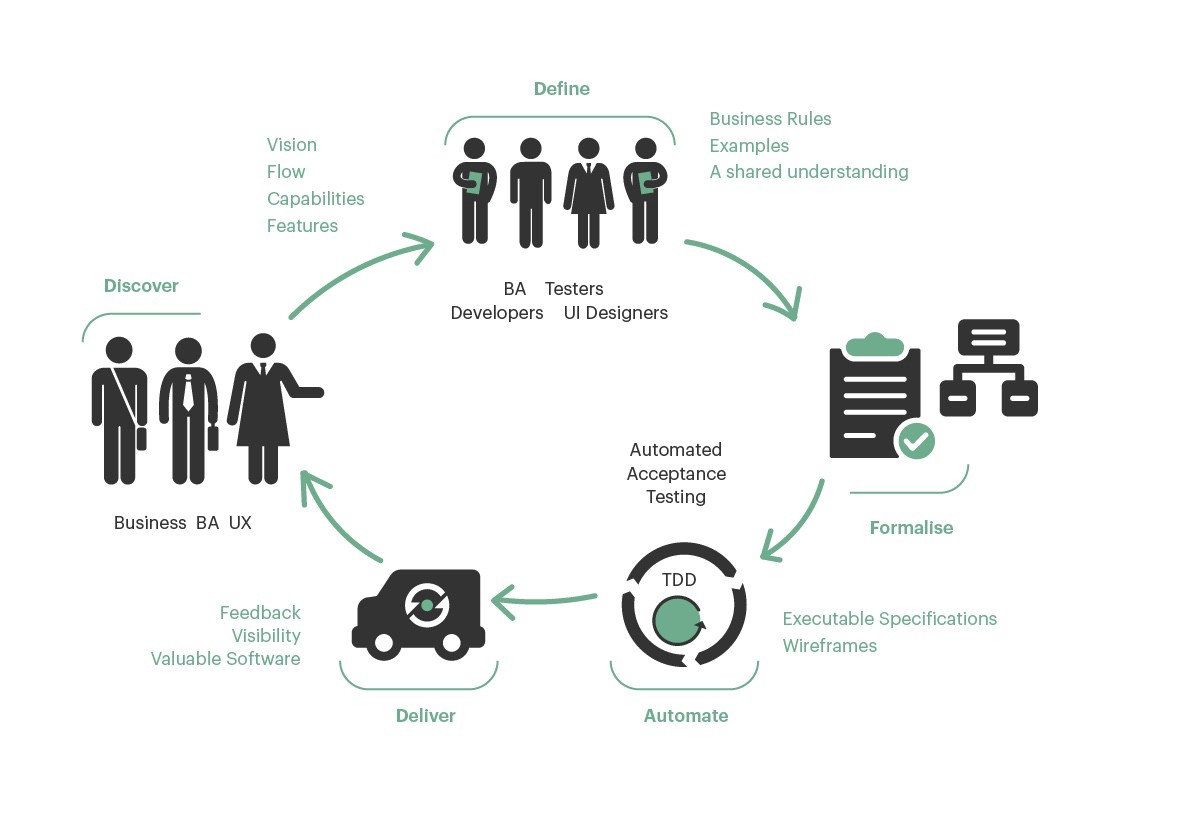
BDD is the software development method that encourages effort between developers, testers, and business stakeholders. view publisher site emphasizes creating test cases within plain language that reflect the specified behaviour of the app. The primary target would be to ensure that will the software reacts as expected from the user’s viewpoint. BDD typically involves:
Writing Scenarios: Scenarios are written throughout a structured format using Given-When-Then (Gherkin syntax) to identify specific conditions in addition to outcomes.
Automating Tests: Scenarios are converted into automated assessments that may be run against the application to verify its conduct.
Collaboration: Encouraging repeated communication between just about all stakeholders to refine requirements and be sure alignment.
1. 2 Precisely what are AI Signal Generators?
AI program code generators use device learning and normal language processing to be able to automatically generate signal based on textual descriptions or demands. They can interpret high-level instructions in addition to convert them straight into executable code, significantly reducing manual coding efforts and speeding up development cycles. AJE code generators are particularly within BDD for:
Generating Phase Definitions: Translating Gherkin scenarios into code that treats typically the application.
Creating Boilerplate Code: Automatically making repetitive code designs, allowing developers to pay attention to more complex tasks.
Reducing Errors: Reducing human errors by simply providing consistent in addition to accurate code generation.
2. Establishing Your current BDD Framework
two. 1 Select a BDD Tool
To get started using BDD, it is advisable to choose a BDD structure or tool. Popular options include:
Cucumber: A widely used tool that supports Gherkin syntax and integrates with several programming languages.
SpecFlow: A. NET tool that provides BDD support and combines with Visual Studio room.
Behat: A PHP-based tool for BDD that supports Gherkin and integrates with assorted PHP frameworks.
Pick a tool that aligns with your project’s technology stack and team’s expertise.
a couple of. 2 Install and even Configure the Application
The actual installation and configuration instructions supplied by the BDD tool which you have chosen. This kind of typically involves:
Setting up the tool through package managers or downloading it through the official website.
Setting up the tool to work with your project’s create system and test runner.
Setting upwards a project composition that supports BDD practices.
3. Integrating AI Code Generator
3. 1 Choosing an AI Signal Generator
There are several AJE code generators available that can assist with BDD execution. Some popular ones include:
OpenAI Codex: An AI design effective at generating computer code snippets based upon natural language explanations.
TabNine: An AI-powered code completion instrument that can support with generating BDD step definitions.
GitHub Copilot: An AI pair programmer that assists with creating code and may be integrated with various IDEs.
Choose an AI code generator that integrates effectively with your advancement environment and supports the programming dialects employed in your project.
3. 2 Training and Fine-Tuning typically the AI Type
To be able to ensure the AI code generator produces accurate and pertinent code, you might need to:
Give Context: Offer detailed descriptions and cases of the situations you want to be able to automate.
Fine-Tune the particular Model: Customize typically the AI model to better understand your current project’s specific demands and coding specifications.
4. Writing plus Automating BDD Cases
4. 1 Writing Scenarios
Begin by writing clear and to the point BDD scenarios employing Gherkin syntax. Every single scenario ought to include:
Provided: The initial framework or setup.
If: The action or even event that causes the behaviour.
Then: The expected outcome or perhaps result.
For example:
gherkin
Copy computer code
Feature: User Sign in
Scenario: Successful Logon
Given an individual will be on the login page
When the user enters appropriate credentials
Then typically the user ought to be redirected to the dash
4. 2 Creating Step Definitions
Utilize AI code electrical generator to convert these scenarios into stage definitions. For instance, if you are usually using Cucumber using Python, the AI tool might make code like:
python
Copy code
through behave import presented, when, then
@given(‘the user is on the login page’)
def step_given_user_on_login_page(context):
circumstance. browser. get(‘http://example.com/login’)
@when(‘the user enters valid credentials’)
def step_when_user_enters_credentials(context):
context. browser. find_element_by_name(‘username’). send_keys(‘user’)
context. internet browser. find_element_by_name(‘password’). send_keys(‘pass’)
framework. browser. find_element_by_name(‘login’). click()
@then(‘the user should be redirected to typically the dashboard’)
def step_then_user_redirected(context):
assert context. browser. current_url == ‘http://example.com/dashboard’
4. 3 Validating and Refining Computer code
Review the developed code to assure it meets your own project’s requirements. Confirm that:
The created step definitions correctly match the situations.
The code is clean, maintainable, in addition to follows best methods.
The scenarios in addition to code align with the application’s behavior.
5. Running and Maintaining BDD Checks
5. 1 Working Tests
Execute your BDD tests applying the test jogger associated with your current chosen BDD tool. Ensure that:
Just about all scenarios pass plus the application behaves as expected.
Any failed assessments are investigated plus resolved promptly.
your five. 2 Maintaining Tests
As your task evolves, you may need to:
Update scenarios and phase definitions to indicate changes in requirements or application behavior.
Refactor code to boost performance or legibility.
Continuously review and enhance the AJE code generator’s outcome to ensure this remains accurate plus relevant.
6. Greatest Practices and Challenges
6. 1 Best Practices
Collaborate Strongly: Maintain open interaction between developers, testers, and business stakeholders to ensure that will scenarios are exact and comprehensive.
Influence AI Wisely: Use AI code power generators to complement your development efforts, not really replace them. Review and refine produced code to assure quality.
Document plus Share: Document the BDD practices and share them together with your team to promote consistency and understanding.
6. 2 Challenges
Accuracy involving AI Generators: AI code generators may produce code that will needs refinement or even adjustment. Regular overview and testing are necessary.
Integration Complexity: Integrating AI tools using existing development work flow can be intricate. Ensure compatibility in addition to address any integration issues promptly.
Trying to keep Up with Adjustments: As AI technology evolves, stay well informed about new innovations and best techniques to make the most involving AI within your BDD processes.
Conclusion
Employing BDD with AI code generators could significantly enhance your advancement process by robotizing code generation plus improving collaboration. By simply following the steps outlined in this specific guide, you could effectively integrate BDD in addition to AI code generation devices into your work, ensuring that your software meets both business requirements and even user expectations. As with any technological innovation, continuous learning and adaptation are key to leveraging these tools effectively and preserving high-quality software enhancement practices.
Putting into action BDD with AJE Code Generators: Some sort of Step-by-Step Guide
by
Tags:
Leave a Reply