As click here for more info (AI) and machine mastering (ML) technologies carry on and advance, their apps in software enhancement have expanded dramatically. One of the particular significant developments within this area is the usage of AJAI to generate code. AI-generated code guarantees to accelerate the program development process, reduce human error, and even streamline repetitive code tasks. However, ensuring the reliability and correctness of AI-generated code remains a vital challenge. This will be where branch insurance comes into have fun as a vital tool for verifying typically the robustness and trustworthiness of code made by AI.
Knowing Branch Coverage
Branch coverage, an idea inside of software testing, procedures the extent to which different twigs or paths in the code have already been executed during screening. A branch found in a program will be typically created by conditional statements, like as if-else, switch-case, or loops (for, while). Ensuring that just about all possible branches are tested can be useful for figuring out edge cases, unhandled conditions, and possible bugs.
Branch insurance is a contact form of control stream testing that harmonizes with other testing strategies, like statement protection, which checks regardless of whether each line of code has been executed, and path coverage, which should check all possible paths through the computer code. Branch coverage hits a balance by centering on conditional reason, which is often exactly where many bugs and issues can come up.
The Importance of Branch Coverage for AI-Generated Signal
1. Ensuring Correctness
AI-generated code, such as any other computer code, must be right to function because intended. By applying branch coverage, developers can systematically confirm that the AI-generated code behaves effectively across various circumstances and scenarios. This specific ensures that typically the AI is not necessarily producing code together with logical errors or perhaps unhandled cases of which could lead to be able to unexpected behavior or even crashes.
2. Determining Hidden Bugs
AI-generated code might bring in subtle bugs that will are not immediately apparent. Branch protection helps in determining these hidden bugs by forcing typically the execution of most branches, including all those that might not really be frequently employed or obvious. This detailed testing can expose issues that may otherwise go unnoticed until they issues in production.
a few. Improving AI Coaching and Model Refinement
Testing AI-generated program code with branch protection can provide handy feedback for improving the AI models. By analyzing the branches that had been not covered or even failed during screening, developers can determine patterns or weaknesses in the AI’s code generation functions. This feedback loop is essential for improving the accuracy and reliability involving the AI types over time.
four. Building Trust plus Adoption
For AI-generated code to acquire widespread adoption, it must be dependable. Comprehensive testing, which includes branch coverage, assists with building confidence inside the reliability and high quality of the signal created by AI. This particular trust is important for convincing stakeholders, including developers, managers, and end-users, to embrace AI-driven growth tools.
Implementing Office Coverage for AI-Generated Code
Step one: Assimilate Testing Frames
In order to implement branch coverage, developers need to assimilate testing frameworks that support this metric. Popular testing frameworks like Jest regarding JavaScript, JUnit intended for Java, and pytest for Python offer branch coverage capabilities. These frameworks can be configured to be able to measure and report branch coverage, offering insights into which usually branches were performed during testing.
2: Generate Test Instances
Generating comprehensive check cases is vital for achieving high branch coverage. Regarding AI-generated code, this can involve each automated and handbook test case era. Automated test era tools can create an extensive set of test cases based on the code’s composition, while manual check cases can concentrate on specific situations and edge situations that require human insight.
Step three or more: Analyze Coverage Studies
Once the tests are executed, insurance coverage reports provide the detailed view of which branches have been covered and which often were missed. These kinds of reports help inside identifying gaps within the testing procedure and locations where typically the AI-generated code may well be lacking. Examining these reports allows developers to target their efforts upon improving coverage and addressing potential issues.
Step 4: Refine AJE Types
The ideas gained from branch coverage analysis may be used to refine the AI models responsible intended for code generation. By understanding where AI’s code fails or misses coverage, designers can adjust the courses data, algorithms, and even model parameters to enhance future code technology. This iterative process enhances the AI’s ability to produce trusted and high-quality computer code.
Challenges and Considerations
Complexity of AI-Generated Program code
AI-generated computer code can be highly structure and varied, generating it challenging in order to achieve comprehensive department coverage. The selection of code patterns produced by AI takes a robust screening strategy that will handle a variety of cases.
Performance Over head
Measuring branch coverage can easily introduce performance overhead during testing. Working extensive tests with branch coverage allowed may slow down the advancement process. Developers want to balance the key benefits of thorough testing together with the practical constraints of your energy and resources.
Dynamic Code Generation
AI-generated code might contain dynamic elements that are known at runtime. Making sure branch coverage with regard to such code requires advanced testing strategies that can take care of dynamic behavior plus execute all probable branches effectively.
Long term Directions
As AJE continue to be evolve, the particular role of office coverage in ensuring reliable AI-generated codes can be increasingly crucial. Future advancements may possibly include: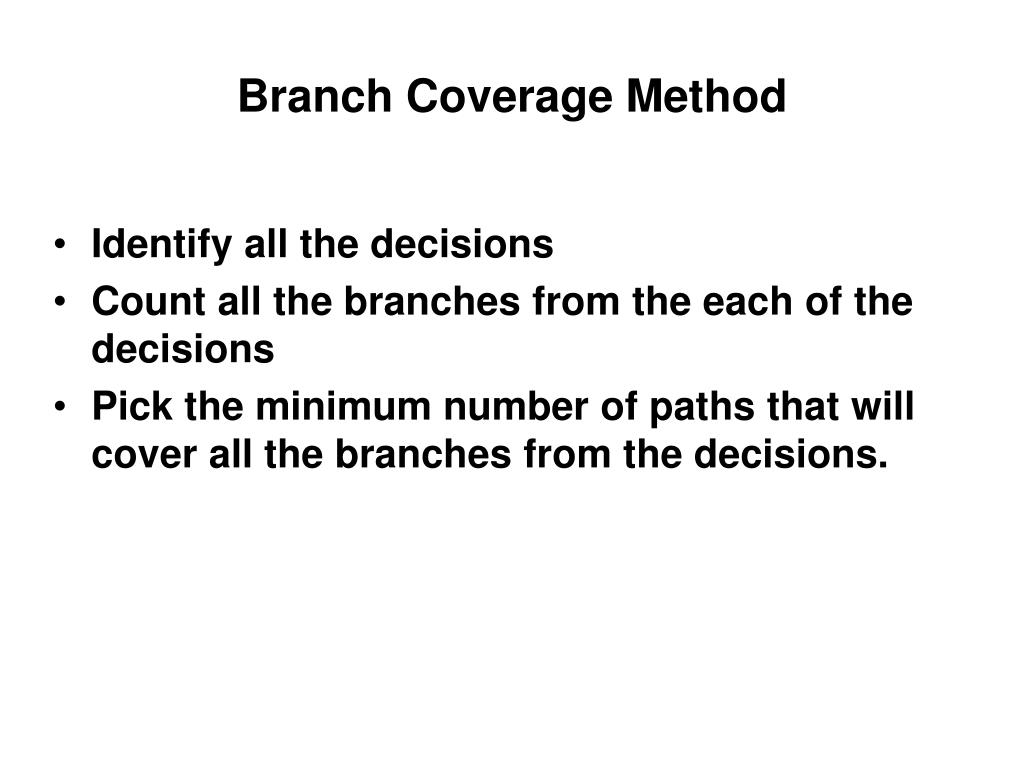
Enhanced Evaluation Generation Tools
Developing more sophisticated computerized test generation tools that can realize and cover complicated AI-generated code clusters better.
AI-Assisted Testing
Leveraging AI to assist inside the assessment process itself, which include generating test situations, analyzing coverage reviews, and identifying possible issues in AI-generated code.
Continuous Integration and Application
Integrating branch coverage metrics into continuous the usage and deployment (CI/CD) pipelines to ensure that AI-generated code is regularly tested and confirmed throughout the growth lifecycle.
Conclusion
Office coverage plays a crucial role in ensuring the reliability and correctness of AI-generated code. By methodically testing all divisions and conditional logic, developers can determine hidden bugs, boost AI models, and make trust in AI-driven development tools. As AI continues to advance, incorporating part coverage in the screening strategy is going to be necessary for delivering premium quality and dependable programs.
The Role of Part Coverage in Ensuring Reliable AI-Generated Code
by
Tags:
Leave a Reply